
Antique Mirror Identification Age Signs: How to Date a Mirror in 5 Minutes Flat
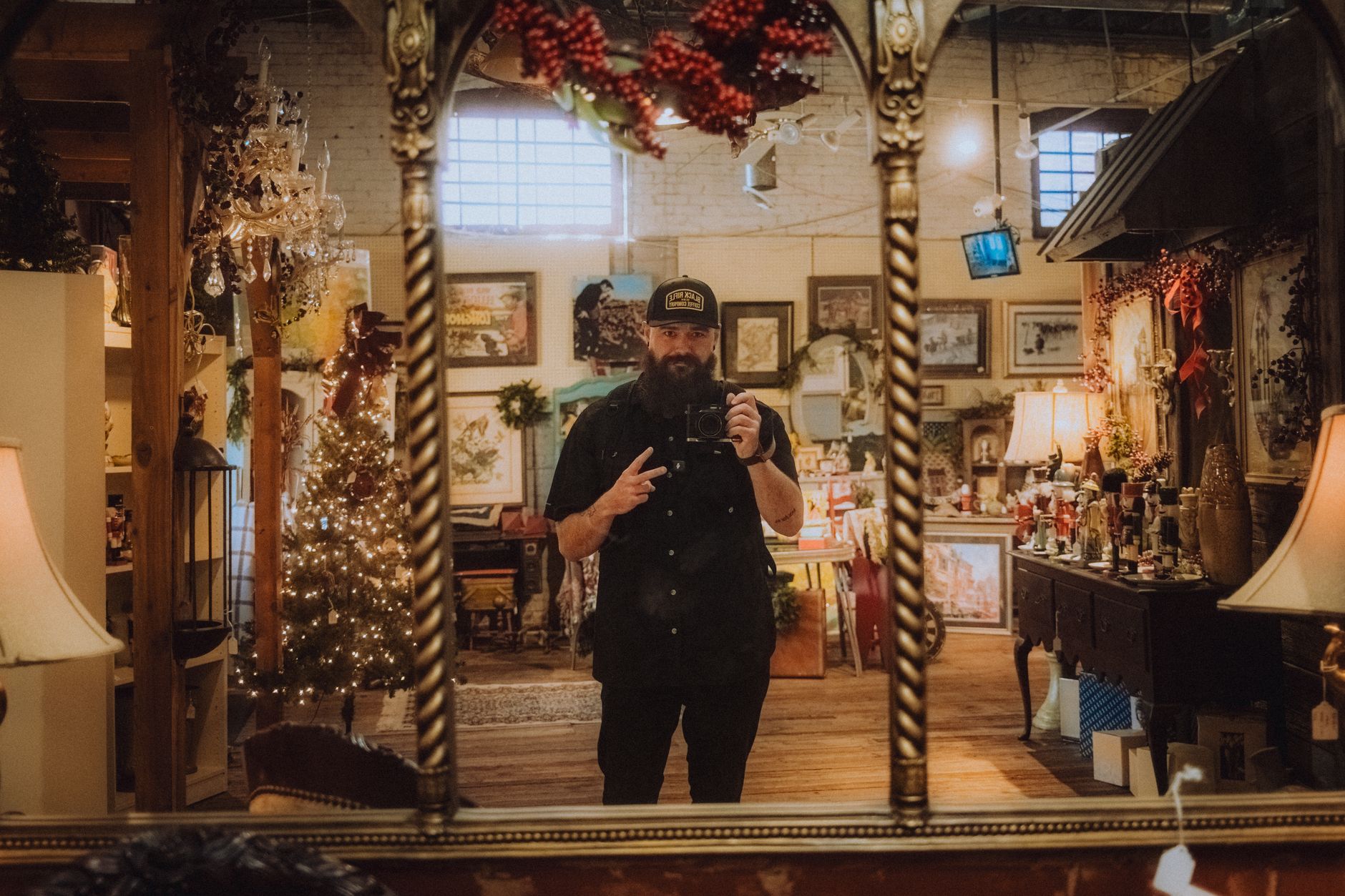
If you’ve walked through any antique mall this fall, you’ve noticed it: mirrors are everywhere, and prices are climbing. Designers are snapping up aged glass for the “collected, layered” look dominating 2026 interiors, and estate sale mirrors that sat at $40 two years ago now carry $200 tags. The problem? Plenty of those “antique” mirrors were made in the 1990s with artificially distressed glass. Knowing the real antique mirror identification age signs has never mattered more — and the good news is you can learn the essentials in about five minutes.
This guide walks you through the exact checks dealers run before they commit, from glass thickness to backing material to the screws holding the frame together.
Check the Glass Itself First
The glass tells you more than any other single feature. Before 1900, mirror glass was made by hand, and it shows.
Look for waviness and distortion. Pre-industrial cylinder glass has subtle ripples. Stand at an angle and let light play across the surface — genuine old glass warps reflections slightly, like looking through calm water. Modern glass is optically flat.
Check the thickness. Antique mirror glass typically runs thinner than modern stock, often around 1/8 inch or less, and thickness can vary across a single pane. Run your fingertip along the edge if the frame allows.
Examine the “sparkle.” Old glass contains tiny seed bubbles and occasional striations from hand production. Hold your phone flashlight at a low angle and scan for these inclusions. A perfectly uniform pane is a modern pane.
Watch for gray or smoky patches. Mercury silvering degrades unevenly, creating cloudy spots that often concentrate near edges and corners. This is called foxing, and authentic foxing looks organic — irregular, soft-edged, varied in density. Faked distressing tends to look uniform, speckled, or suspiciously symmetrical.
Antique Mirror Identification Age Signs in the Silvering
Flip the mirror around or peek behind the frame. The backing is where reproductions usually fail.
Mercury vs. silver backing. Before roughly 1840, mirrors were silvered with a tin-mercury amalgam. Mercury mirrors develop a distinctive sparkle and crystalline deterioration over time. After 1840, the silver nitrate process took over, which ages to darker, grayer spotting. If a seller claims 1780 but the backing looks like classic silver-nitrate foxing, something’s off.
The backing material matters. Genuine 18th and early 19th century mirrors often have wooden backboards — rough-sawn pine or oak planks, sometimes with hand-plane marks. Mid-to-late 1800s pieces may show paper or fabric backing. A sheet of modern plywood or cardboard stapled on is a red flag (though backings do get replaced, so weigh this with other evidence).
Original vs. resilvered. Here’s a nuance many beginners miss: a mirror can have an 1820s frame with 1950s glass. Resilvering was common and doesn’t kill value, but it changes the price conversation. If the frame checks out as period but the glass is flawless, ask directly whether it’s been resilvered. Honest dealers will tell you.
Read the Frame Like a Document
Frames carry their own dating evidence, and it often contradicts what the glass suggests.
Joinery. Hand-cut dovetails and mortise-and-tenon joints with slight irregularities point to pre-1860 construction. Perfectly uniform machine-cut joints suggest later manufacture. Our dovetail dating guide goes deeper on this if you want the full breakdown.
Fasteners. Flip the mirror and inspect screws and nails. Hand-forged nails (pre-1800), cut nails (roughly 1800–1890), and wire nails (post-1890) each tell a story. Phillips-head screws mean 20th century work — either the piece is newer than claimed or it’s been repaired.
Gilding and gesso. Period gilt frames were built up with layers of gesso, then water-gilded. Look for gesso cracking in fine patterns and reddish bole clay showing through worn gold. Modern reproductions use gold paint or composition ornament that chips rather than wears, revealing white plaster underneath instead of red clay.
Style sanity check. A Chippendale-style fretwork frame with 1920s glass and wire nails is a reproduction or a marriage of parts. Style should roughly agree with construction evidence.
The 5-Minute Field Test Sequence
When you’re standing at an estate sale with competition breathing down your neck, run this sequence in order:
- Angle check (30 seconds): Tilt the mirror and look for waviness and distortion in the reflection.
- Edge inspection (30 seconds): Check glass thickness at any exposed edge.
- Flashlight scan (1 minute): Rake light across the surface hunting for seed bubbles and organic foxing patterns.
- Back flip (2 minutes): Examine backing material, fasteners, and any labels or maker’s stencils.
- Frame close-up (1 minute): Check joinery, gesso cracks, and gilding wear patterns.
If three or more checks point to age, you’re likely holding something genuinely old. If the glass is wavy but the back has Phillips screws and staples, you’re probably looking at a vintage reproduction — which can still be worth buying, just not at antique prices.
What These Signs Mean for Your Wallet
Understanding antique mirror identification age signs directly protects your budget. Right now, a genuine Georgian or Federal-period mirror with original glass routinely brings $800–$3,000 at auction, while a 1980s reproduction of the same style might be worth $75–$150 on a good day. Mid-century and Victorian mirrors sit in between, typically $150–$600 depending on size and condition.
The market trend is your friend here: because designers want authentic patina, honest foxing and honest wear are selling points, not flaws. A dealer trying to pass off fake distressing is counting on you not knowing the difference between organic edge-concentrated foxing and spray-bottle speckle. Now you do.
One last tip: photograph the back of every mirror you seriously consider. Labels, stencils, and chalk marks often identify makers or retailers, and a quick search from the parking lot can turn a $60 guess into a confirmed $500 find.
Conclusion: Trust the Evidence, Not the Tag
The mirrors flooding the market in 2026 range from genuine 18th-century survivors to last decade’s craft projects, and the price tags rarely tell you which is which. Mastering antique mirror identification age signs — wavy hand-blown glass, organic foxing, period backing materials, hand-cut joinery, and honest gilding wear — gives you a five-minute system that works at estate sales, auctions, and antique malls alike. Run the sequence, weigh the evidence together rather than fixating on one feature, and don’t be afraid to walk away when the story doesn’t add up. The best find is the one you can date with confidence before your money leaves your pocket.