
How to Date Antique Bottles: A Collector's Field Guide to Reading Glass
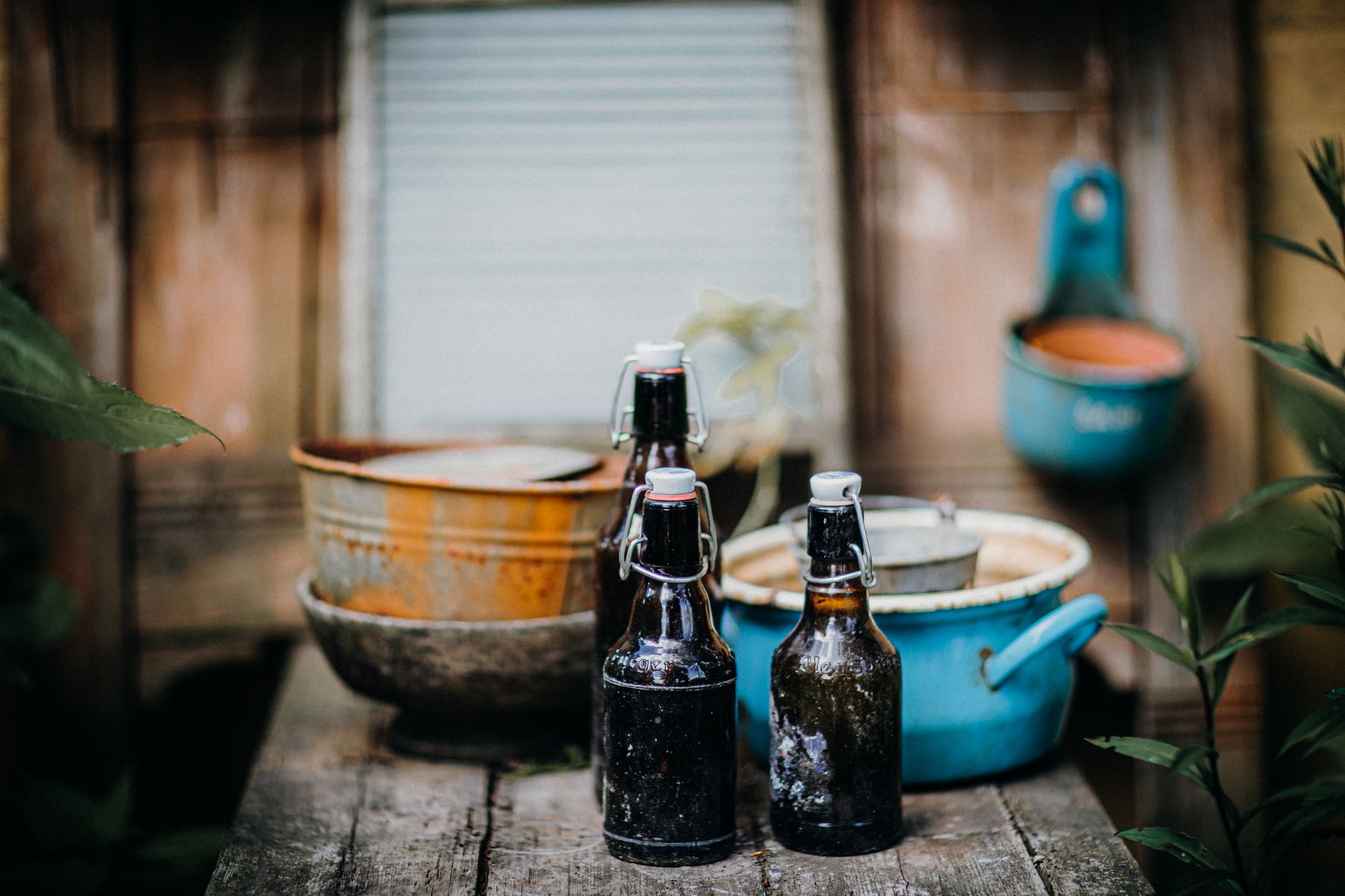
The antique bottle market is experiencing a renaissance right now. With more collectors entering the hobby through online auctions and estate sale apps, the ability to accurately date bottles has never been more valuable—or more profitable. Whether you’ve just inherited a box of old medicine bottles or you’re scanning tables at your local antique mall, knowing how to date antique bottles can mean the difference between a $5 reproduction and a $500 original.
Dating antique bottles isn’t about guesswork. Glassmakers left behind a trail of physical evidence—mold seams, pontil marks, embossing styles, and manufacturing techniques—that tells you exactly when a bottle was made. Once you learn to read these clues, you’ll spot age indicators in seconds.
Start with the Mold Seams
The fastest way to narrow down a bottle’s age is by examining its mold seams. These raised lines running up the sides of the bottle reveal how it was manufactured, and manufacturing methods changed dramatically over time.
Free-blown bottles (pre-1860) have no mold seams at all. Glassblowers shaped these bottles entirely by hand and breath, resulting in irregular, often asymmetrical forms. If your bottle has no seams and a slightly wonky appearance, you’re likely holding something from before the Civil War.
Three-piece mold bottles (1820s-1890s) show two vertical seams running from base to shoulder, plus a horizontal seam around the shoulder where the dip mold ended. These bottles were blown into hinged molds, and the telltale seam pattern is unmistakable once you know what to look for.
Two-piece mold bottles (1860s-1910s) display a single vertical seam running from base to lip. The key detail here is where that seam stops. On bottles made before 1900, the seam typically fades or disappears before reaching the very top of the lip. After 1900, machine-made bottles show seams running all the way through the lip itself.
Automatic bottle machines (1903-present) changed everything. The Owens Automatic Bottle Machine, patented in 1903, produced bottles with seams running completely through the lip and a distinctive “ghost seam” on the neck. If you see a seam crossing the entire lip, your bottle is almost certainly post-1903.
Decode the Pontil Mark
Flip your bottle over and examine the base. What you find there can confirm or refine your dating estimate.
Pontil marks are scars left behind when glassblowers detached the pontil rod—a metal rod used to hold the bottle while finishing the lip. These rough, sometimes sharp marks indicate hand-blown manufacture, typically pre-1860.
There are several pontil types to recognize:
- Open pontil: A circular, rough scar, often with glass residue. Common on bottles from 1840-1865.
- Iron pontil: A reddish-brown or black residue mark from an iron-tipped pontil rod. Popular from 1840-1870.
- Sand pontil: A grainy, sand-textured scar. Found on bottles from 1850-1870.
- Glass-tipped pontil: A smooth ring of excess glass. Used from 1850-1880.
No pontil mark? Look for a smooth, indented base or a molded base with markings. Bottles made after 1860 increasingly used snap-case tools instead of pontil rods, leaving smooth bases. Machine-made bottles after 1903 have perfectly uniform bases, often with mold numbers.
Read the Embossing and Maker’s Marks
Embossed text and symbols provide some of the most precise dating evidence available.
Maker’s marks on the base or heel of the bottle identify the glass manufacturer. The Owens-Illinois Glass Company, for example, used a diamond-and-I logo from 1929 onward. Earlier marks include “O” in a square (1911-1929) and various configurations of “I.G.Co.” for Illinois Glass Company (1873-1929).
Date codes appear on many machine-made bottles. Owens-Illinois used a two-digit system where the first number indicated the plant and the second the year. A “5” next to the diamond logo means 1935 or 1945—context matters.
Patent dates embossed on bottles are helpful but tricky. “Patented 1889” doesn’t mean your bottle was made in 1889—it means the design was patented that year. Bottles with patent dates were often produced for decades afterward.
Content embossing also offers clues. Bottles embossed with “Federal Law Forbids Sale or Reuse of This Bottle” date to the Prohibition era (1920-1933). Medicine bottles with “Cure” in the name typically predate the 1906 Pure Food and Drug Act, which cracked down on unsubstantiated health claims.
Examine the Lip and Finish
The bottle’s finish—the technical term for the lip and neck area—underwent significant changes that help with dating.
Applied finishes (pre-1880) were added separately after the bottle was blown. Look for a visible seam or ridge where the finish was attached, often with slight asymmetry or drips of excess glass.
Tooled finishes (1880-1910) were shaped by hand tools while the glass was still hot, creating a more uniform appearance without a separate application seam. The transition from applied to tooled finishes happened gradually, so this feature works best alongside other dating evidence.
Machine-made finishes (post-1903) are perfectly symmetrical with no tooling marks. The lip will be uniform all the way around, and the seam (if present) runs through it.
Put It All Together: A Quick Dating Framework
Here’s how to combine these clues for accurate dating:
- Check for mold seams. No seams? Likely pre-1860. Seams through the lip? Post-1903.
- Examine the base. Pontil mark? Pre-1870. Smooth base with mold numbers? Machine-made.
- Read any embossing. Patent dates, maker’s marks, and content claims narrow the window.
- Inspect the finish. Applied finish suggests pre-1880; tooled finish points to 1880-1910.
A bottle with a two-piece mold seam stopping below the lip, a smooth base, and a tooled finish likely dates to 1880-1900. Add a maker’s mark from a company operating during that period, and you’ve got a solid attribution.
Your Next Steps in Bottle Dating
Learning how to date antique bottles transforms random finds into documented pieces of history. Start by handling as many confirmed examples as possible—visit antique malls, join bottle collecting clubs, and study reference books like the Bottle Makers and Their Marks by Julian Toulouse.
The current surge in bottle collecting means more reproductions are entering the market, too. Fakers know that Civil War-era medicine bottles and early sodas command premium prices, so they’ve gotten better at mimicking age indicators. But they rarely get every detail right. A bottle might have convincing wear but a machine-made lip, or authentic-looking embossing on glass that’s too clear and perfect for its supposed era.
Trust the physical evidence. Mold seams don’t lie. Pontil marks can’t be easily faked. And when multiple dating indicators align—seams, base, finish, and embossing all pointing to the same era—you can buy with confidence.
Your next estate sale visit just became a treasure hunt with a decoder ring.